Eleven Signs of Hidden Mold in Los Angeles Homes
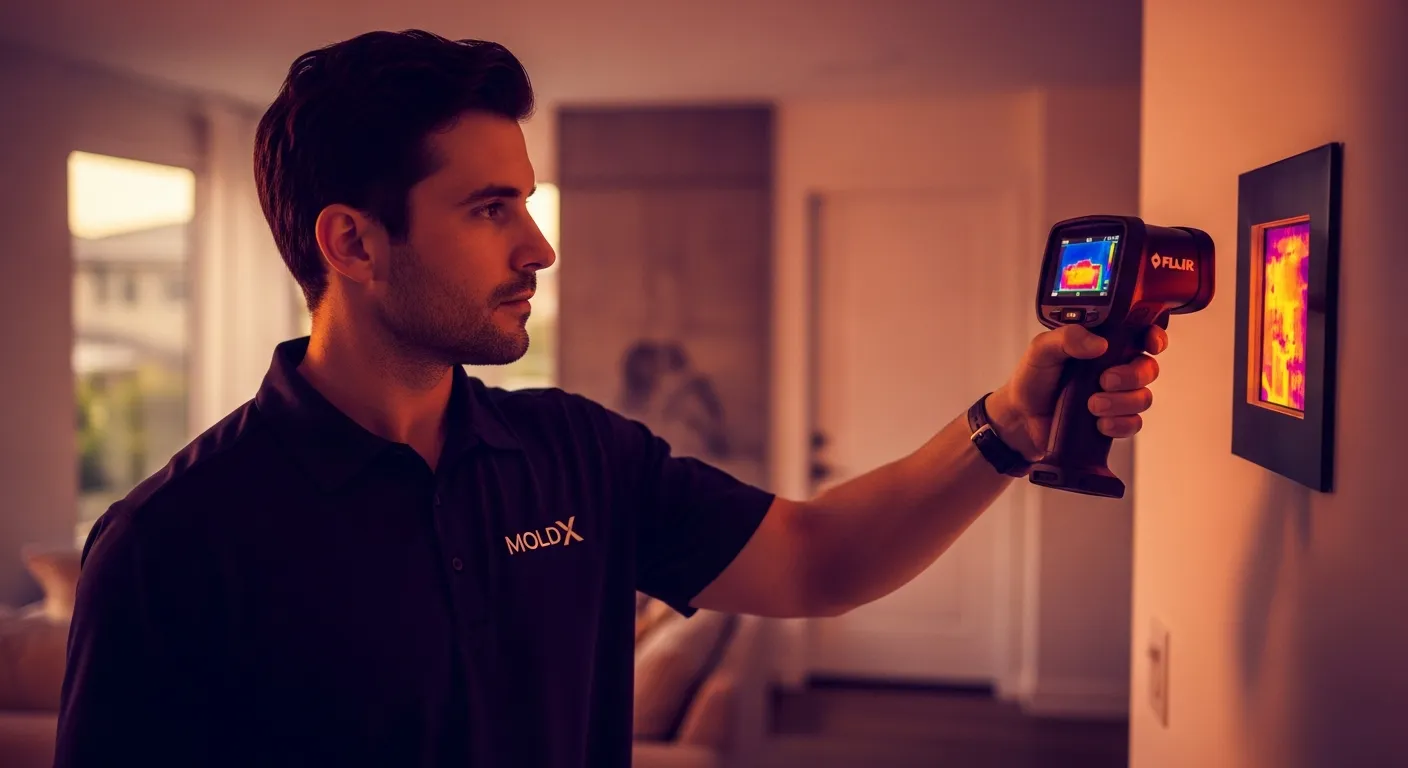
Hidden moisture and microbial growth can occur in Los Angeles homes, including homes built before 1990. Aging plumbing, layered remodels, and Southern California's varied marine-and-foothill climate can create conditions where moisture or growth is concealed behind drywall, under flooring, near HVAC components, or in attic and crawl-space cavities.
Visible growth or staining may not show the full extent or duration of a moisture condition. The signs below can help a homeowner decide whether further moisture investigation is appropriate, but no single sign establishes that mold is present.
1. A persistent musty or earthy smell that intensifies with HVAC operation
A persistent organic, earthy, or musty odor can justify checking for moisture and inspecting accessible HVAC components. HVAC operation moves air through the system, so a changing odor may help identify an area for investigation; odor alone does not identify mold, its location, or its source.
2. Recurring respiratory symptoms that improve when you leave the house
Symptoms such as congestion, cough, headache, or fatigue can have many causes and do not identify mold exposure or a building source. A qualified clinician should evaluate health concerns. An environmental inspection may document moisture conditions and selected samples when that information is useful, but it does not diagnose illness, exposure, or causation.
3. Discoloration on ceilings, walls, or baseboards that "wasn't there last month"
A new yellow, brown, or grey stain on a wall or ceiling may indicate current or historic moisture. Inspect the area, nearby plumbing or roofing, and accessible adjacent materials rather than assuming the stain shows the extent or source.
4. Paint that is peeling, blistering, or bubbling without obvious cause
Peeling, blistering, or bubbling paint can accompany moisture, substrate, preparation, or coating problems. Check defined areas with appropriate moisture tools and inspect likely sources such as bathroom plumbing, exterior penetrations, or irrigation.
5. Warped or buckled baseboards, flooring, or wall corners
Wood and engineered flooring can expand when wet. Lifted baseboards, cupped flooring, or bulging wall corners warrant investigation for current or past moisture, including possible slab or wall-cavity leaks, but do not establish a particular source.
6. Condensation on windows that does not match the weather
Windows can collect condensation when surface temperatures fall below the indoor air's dew point. Persistent condensation warrants checking indoor relative humidity, ventilation, and window conditions because sustained dampness can support microbial growth.
7. A sudden, unexplained increase in your water bill
Some plumbing leaks begin at low volume without obvious flooding. An unexplained water-bill increase is a reason to check fixtures, irrigation, and concealed supply lines. The duration, affected materials, and any indoor environmental effect require site-specific investigation.
8. HVAC return-air filters that are darker or more moisture-laden than usual
A discolored or damp HVAC filter can reflect particulate loading, condensation, maintenance issues, or other conditions. It is a reason to inspect accessible HVAC components and moisture conditions, not proof of mold in the duct system.
9. Crawl-space or attic odors detectable from inside the living space
Odors that appear to come from a crawl space or attic can justify evaluating air pathways, pressure relationships, moisture, and accessible materials. Odor movement alone does not establish that mold or a particular contaminant is entering living areas.
10. Changes in a pet's health or behavior
Ear, skin, or respiratory concerns in a pet can have many causes. A veterinarian should evaluate animal-health questions. A separate environmental inspection can document accessible moisture conditions and selected samples, but it cannot diagnose the pet, exposure, or causation.
11. A roof leak — even a "small one" — that was patched but never inspected internally
Patching a roof entry point does not by itself establish whether adjacent materials are dry. After a leak, inspect accessible wall cavities, attic insulation, and ceiling assemblies and verify moisture conditions rather than assuming the patch resolved all effects.
What to do if you recognize multiple signs
If one or more of these signs persist, consider a professional moisture inspection. Depending on the agreed scope and accessible conditions, an inspector may use thermal imaging, moisture meters, and selected air or surface samples analyzed by a laboratory. The report documents inspection-time accessible observations, moisture readings, and submitted-sample results; it does not diagnose illness, toxicity, exposure, causation, or treatment needs, and it cannot establish concealed or future conditions.
Mold X Inspectors serves the entirety of Los Angeles County from our Glendale headquarters. Calls and inspection visits are available 24/7, including routine evenings and weekends; call to arrange timing, which depends on location, safe access, property scope, and current inspector availability. Same-day appointments are not guaranteed.
About the author
Mold X Editorial Desk
Mold X Inspectors. Mold X Inspectors is an independent mold inspection, testing, and indoor air quality firm headquartered in Glendale, California, serving all of Los Angeles County since 2018.
More from the Resource Center
All articlesAre home mold test kits worth it?
Understand what a home mold test kit can show, what it cannot prove, and when a moisture inspection is more useful than another sample.
The mold air test looks normal, but the room still smells musty
A reassuring air sample does not explain every persistent odor. Learn what to ask about moisture, sample locations and the inspection report.
Do you need mold testing when you can already see mold?
Visible mold often does not require sampling. Learn how moisture, cleanup scope and documentation needs affect the next step.