A Water Leak at Night: What to Do Now
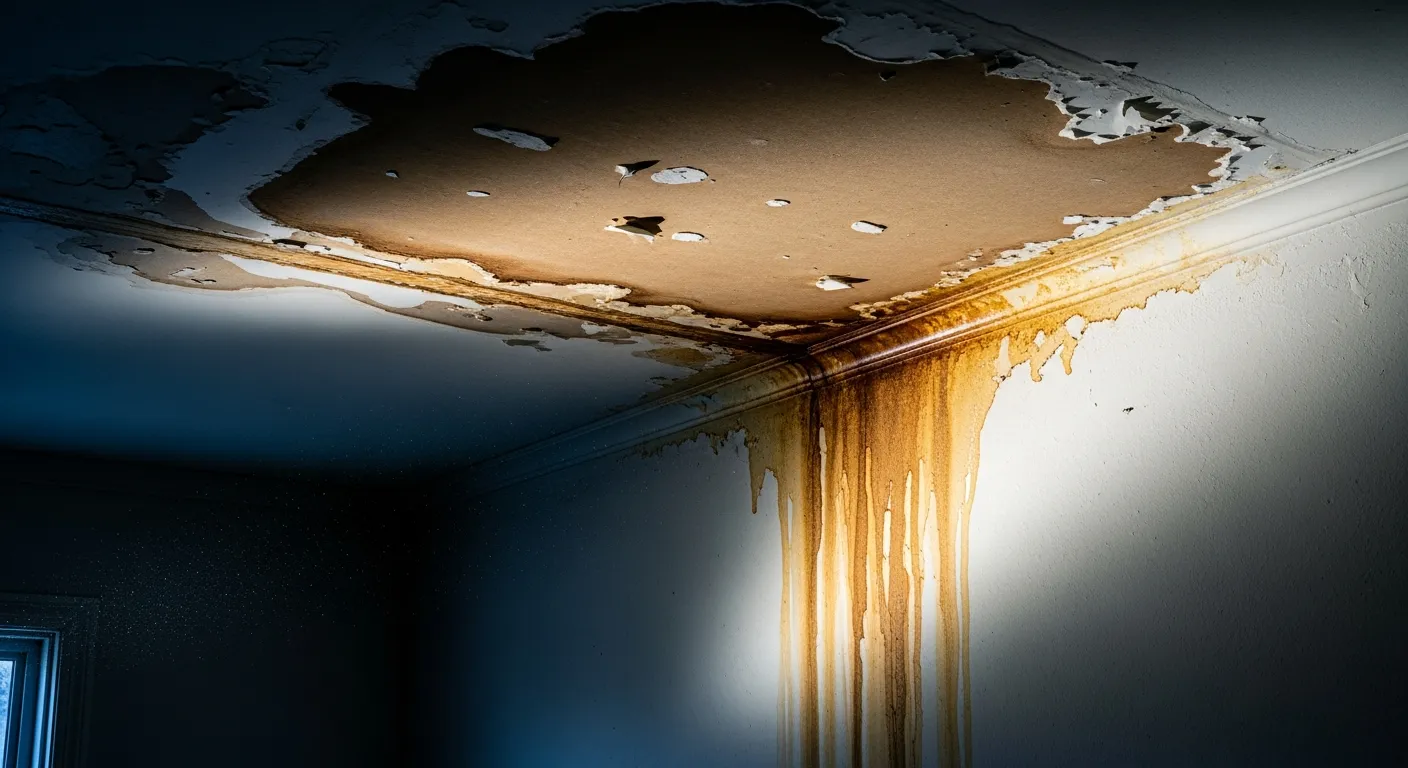
If water is moving quickly, a ceiling is sagging, sewage may be involved, or water is near electrical equipment, put safety before property. Call emergency services for an immediate threat to life or fire. Do not enter standing water or touch wet electrical equipment.
First 10 minutes: people, electricity, water
- Move people and pets away. Keep clear of a bulging ceiling and the room below it; wet drywall or plaster can fall.
- Treat electricity cautiously. Ready.gov advises not to touch electrical equipment if it is wet or if you are standing in water. If you cannot reach the breaker from a completely dry, safe location, do not attempt it—call the utility, fire department, landlord emergency line, or a qualified electrician as appropriate.
- Stop the source only if safe. Close the nearby fixture or appliance shutoff. If the source is unknown or the local valve does not stop it, use the building’s main water shutoff only if you know its location and can reach it safely. In a rental or multifamily building, contact the owner, manager, or emergency maintenance line immediately.
- Do not stand beneath a wet ceiling or puncture it. A qualified responder should assess the hazard.
Next 30 minutes: limit spread without taking risks
Place containers under drips only in a dry, stable area. Move undamaged belongings away from water if they are light and safely reachable. Use towels for a small clean-water release, but do not use an ordinary household vacuum on water. Avoid fans when sewage, contaminated floodwater, damaged electrical systems, or widespread visible mold may be involved; professional assessment and controls may be needed.
Water from toilets, drains, outdoor flooding, or an unknown source may contain contaminants. Avoid direct contact. Children, pets, and people with respiratory conditions or immune suppression should not participate in hazardous cleanup; seek individualized guidance from a qualified clinician where health concerns exist.
Document before cleanup changes the scene
From a safe location, take wide and close photographs and short video. Record:
- when the leak was discovered and when water was shut off;
- rooms and surfaces affected;
- the apparent source, without claiming certainty;
- calls, messages, and response times;
- itemized damaged belongings;
- plumber, roofer, restoration, or building-management observations;
- drying equipment placement and daily moisture or humidity records if a professional provides them.
Documentation does not guarantee insurance coverage, reimbursement, or a legal result. Report the loss promptly through the channels required by your policy, lease, or building rules and ask what documentation the recipient requires.
Overnight calls and the next morning
Arrange an appropriate source professional: plumber for a supply or drain concern, roofer for active rain entry, HVAC professional for condensate, or building maintenance for shared systems. Ask a qualified water-damage professional about extraction and drying when materials are substantially wet.
EPA recommends fixing the water problem and drying water-damaged areas and items within 24–48 hours to help prevent mold growth. That is a prompt-action goal, not a guarantee that growth starts or stops at a precise hour. Material type, temperature, duration, contamination, and access all matter. Do not paint or caulk over dampness.
When an inspection may help
Consider an independent moisture and mold inspection when the source or spread is unclear; water entered walls, ceilings, flooring, cabinets, attic, or crawl space; odor, staining, or growth appears; materials stayed damp; or you need an inspection-time record. Inspection can document accessible conditions and selected samples when they answer a defined question. It cannot see every concealed area or determine medical causation, insurance coverage, or liability.
Mold X calls and inspection visits are available 24/7, and the individual appointment time is confirmed with the customer. There is no extra appointment charge for overnight, weekend, same-day, or rush inspection appointments, or travel within the normal service area.
For standard residential homes, the initial inspection is $199, including visual inspection, thermal imaging, verbal findings, and written recommendations or a report on request, without laboratory samples. If sampling is appropriate, the $349 package includes two lab samples, results, explanation, and recommendations; additional samples are $99 each. Larger homes and commercial properties: call for a quote.
This guide does not replace emergency, electrical, plumbing, restoration, medical, insurance, or legal advice.
Sources and related reading
About the author
Mold X Editorial Desk
Mold X Inspectors. Mold X Inspectors is an independent mold inspection, testing, and indoor air quality firm headquartered in Glendale, California, serving all of Los Angeles County since 2018.
More from the Resource Center
All articlesAre home mold test kits worth it?
Understand what a home mold test kit can show, what it cannot prove, and when a moisture inspection is more useful than another sample.
The mold air test looks normal, but the room still smells musty
A reassuring air sample does not explain every persistent odor. Learn what to ask about moisture, sample locations and the inspection report.
Do you need mold testing when you can already see mold?
Visible mold often does not require sampling. Learn how moisture, cleanup scope and documentation needs affect the next step.